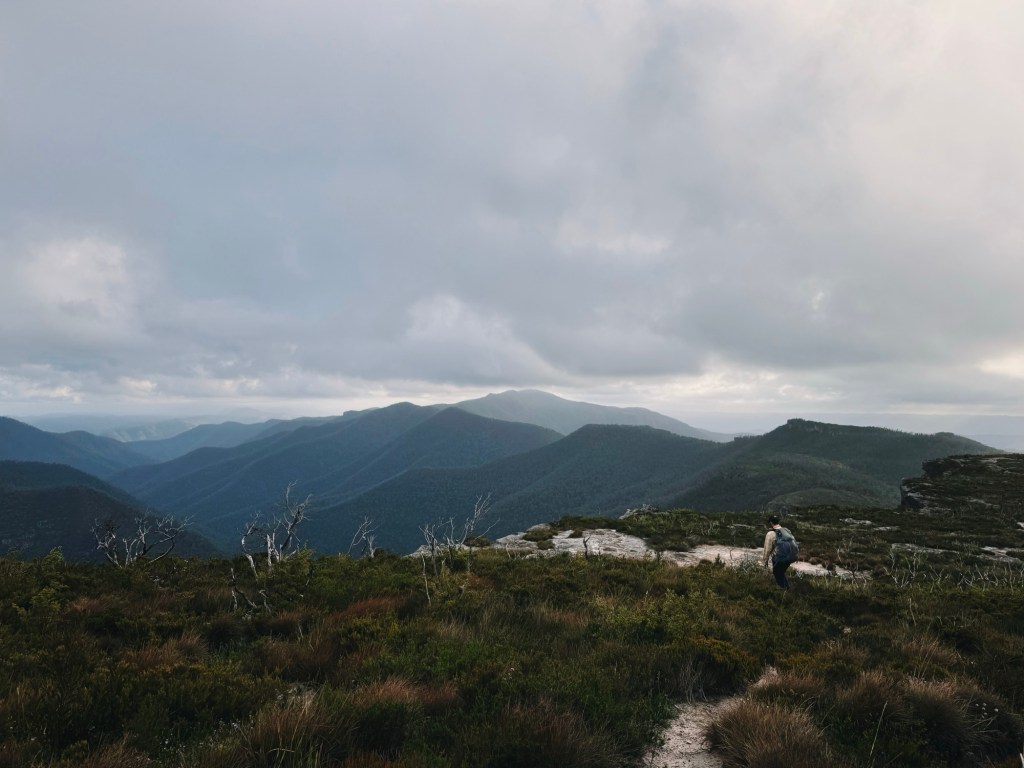
The Kanangra to Katoomba (K2K) trail is a rite of passage for anyone who scoffs at the word difficult. Once a well-trodden track, it has faded into a barely-there footpad traversing 45km through the untamed wilderness of Kanangra-Boyd and the lesser-walked areas of Blue Mountains National Parks. Some even dub it ‘The Hardest Overnight Hike in NSW’.
There are two K2K hikes in NSW. This is not to be confused with the hike from Kiandra to Kosciuszko that follows the Australian Alps Walking Track (AAWT) in Kosciuszko National Park.
Route overview
Distance: 45km (one-way)
Elevation: 2500m
Duration: 2-4 days
Experience level: Advanced (Grade 5 Hike)
Location: Kanangra-Boyd & Blue Mountains National Park
GPX: https://ridewithgps.com/routes/49163095
About the K2K
The K2K track runs through the land of the Gundungurra people. Although there are many significant Aboriginal sites like rock art and ceremonial locations in the area, there exact locations are protected to preserve and respect their cultural heritage.
Classed as a Grade 5 hike, this is for experienced walkers only. Months of summer bushfires and pandemic lockdowns have taken their toll, transforming the trail into a challenging and overgrown route. It passes through a declared wilderness area, so is there is no track maintenance, or trail markers.

Over the years, it has been the site of countless search-and-rescue operations, as a result of its navigational difficulty, unreliable water sources, and steep, rugged terrain. Many underestimate this hike. Need any more warning? Just read the reviews on AllTrails. Some hikers give it a one-star rating with comments like “Don’t forget the machete!” and “No trail (read: none).”
Where to Start the K2K
The K2K can be walked in either direction. Unless you’re feeling particularly masochistic and want to do an out-and-back, you’ll need to prearrange transport. We started at Kanangra Walls and ended at the Narrow Neck locked gate (Katoomba) for an easier car shuttle home. We arranged our car shuttle the night before and stayed at Boyd River Campground, just 7km from the Kanangra Walls trailhead—a peaceful spot to rest up and prepare for what’s ahead.
K2K Trip Report
Day 1: Kanangra Walls to Coxs River
Kanangra Walls to Plateau
The trail kicks off at the Kanangra Walls car park. A short detour takes you to the Walls lookout, and trust me, this view is not to be missed. The landscape is jaw-dropping, with sheer cliffs that seem to stretch forever. The start of the hike walks along the top of these walls, so it’s worth soaking in the adventure ahead.
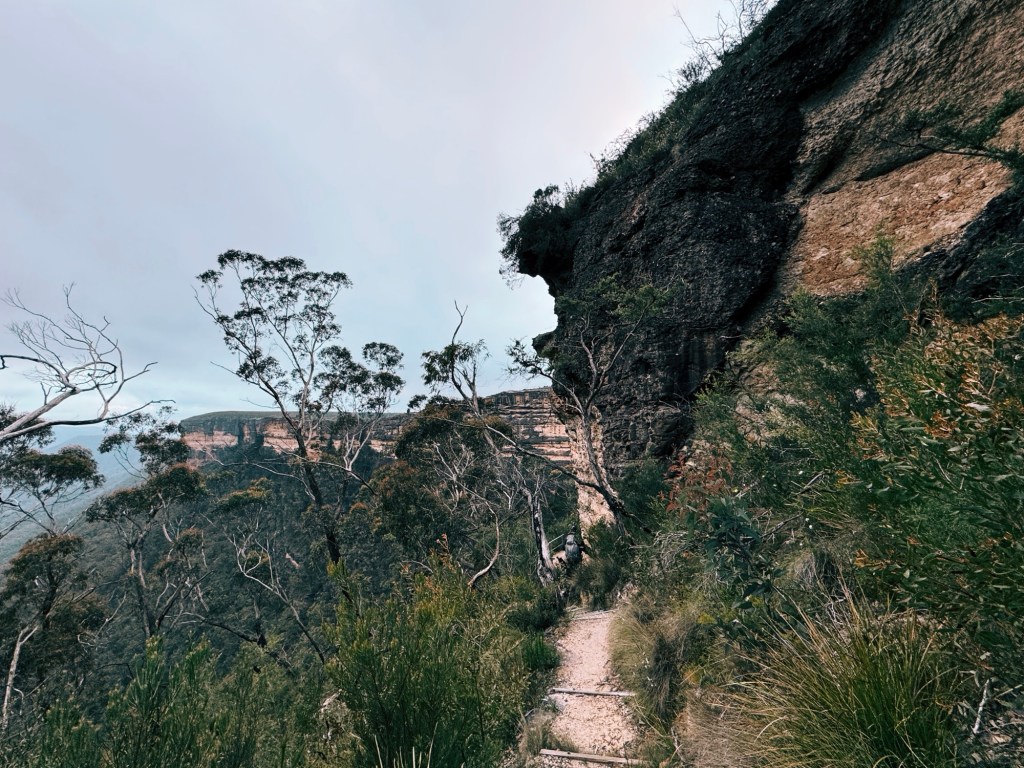
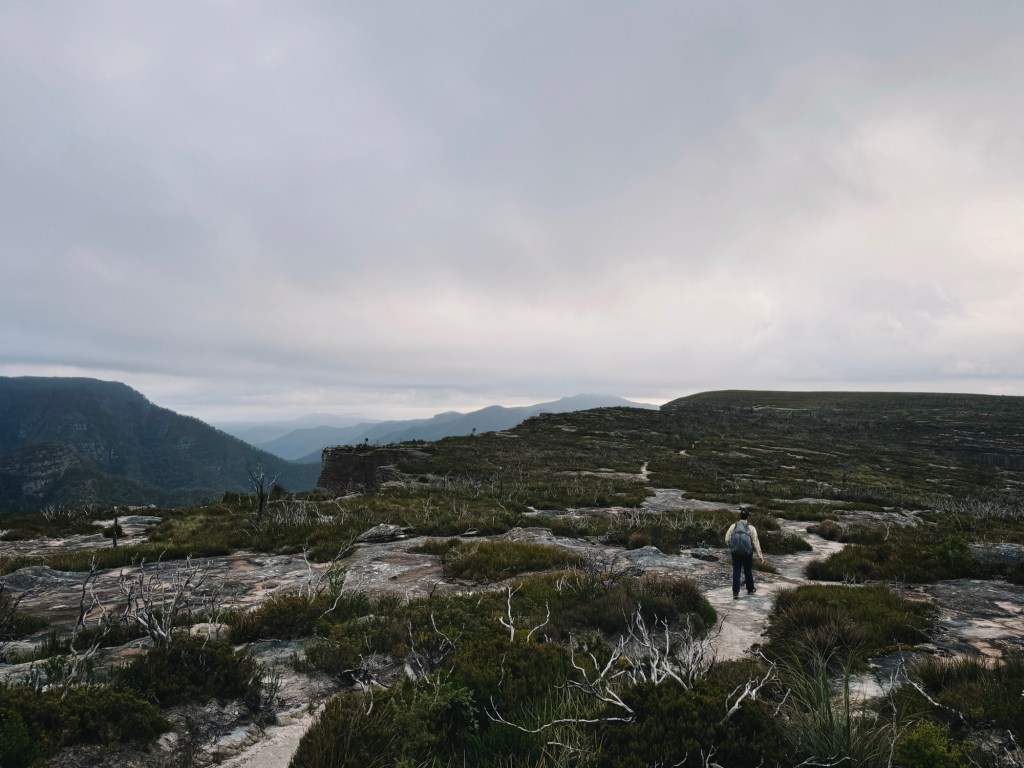
The first 3km’s across the Kanangra Plateau are deceptively gentle—a distinct, scenic trail lulls you into thinking “this isn’t so bad.” Five minutes in, I was already tripping over rocks as I tried to take in the expansive views. Keep an eye on your footing though; there’s no fences at the cliff edge.
Plateau to Mount Cloudmaker
Things quickly change after descending off the plateau through a gap in the cliffs. The trail becomes a rollercoaster of steep ascents and descents along the ridgeline. Massive rocky cliffs force the path to either climb over or skirt around them. It’s a steady climb to the summit of Mount Cloudmaker, passing charmingly named knolls Rip, Rack, Roar, and Rumble.
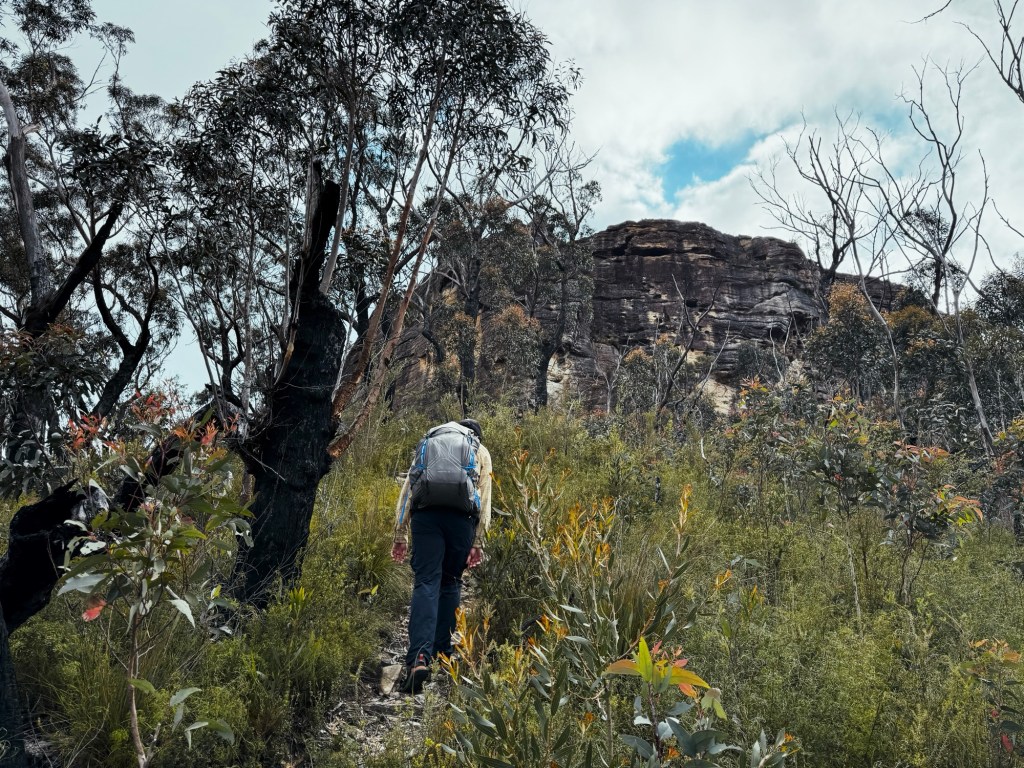
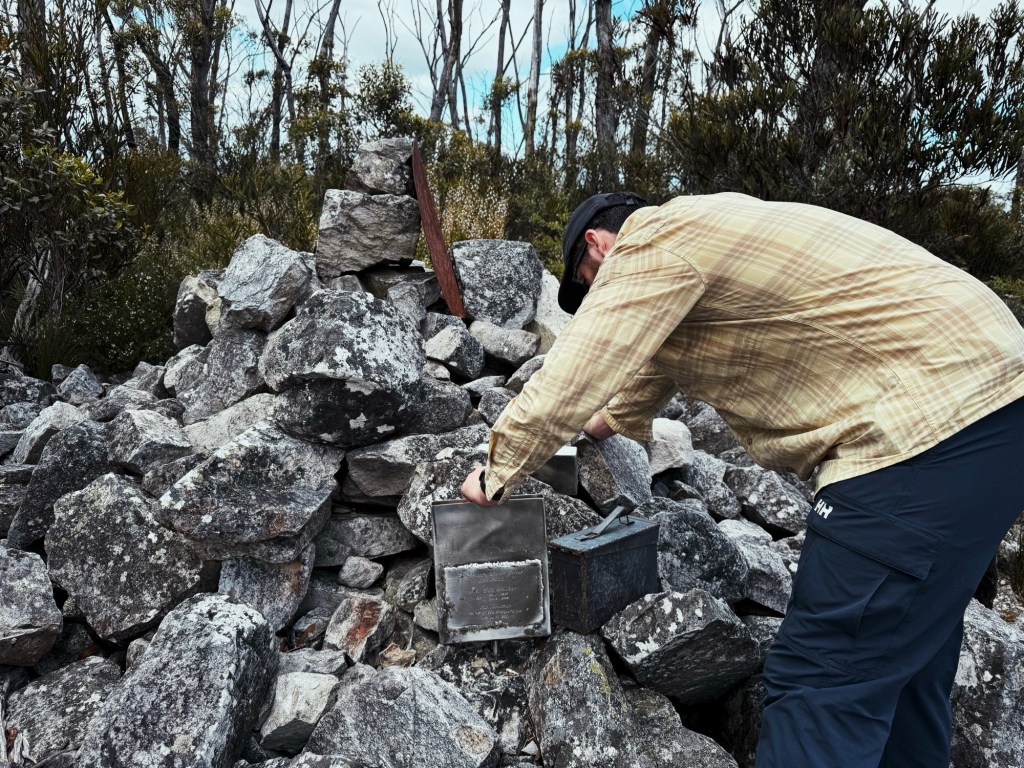
Reaching Mount Cloudmaker is an achievement in itself. While trees obscure the views, glimpses of jagged peaks are a reminder just how far from civilization you are. At 1164m, it’s the highest point on the trail and home to a massive rock cairn and summit logbook. Flipping through the pages, most entries are from hikers who either did an out-and-back to this summit or deferred to 100 Man & 1000 Man Caves.
Mount Cloudmaker to Dex’s Creek
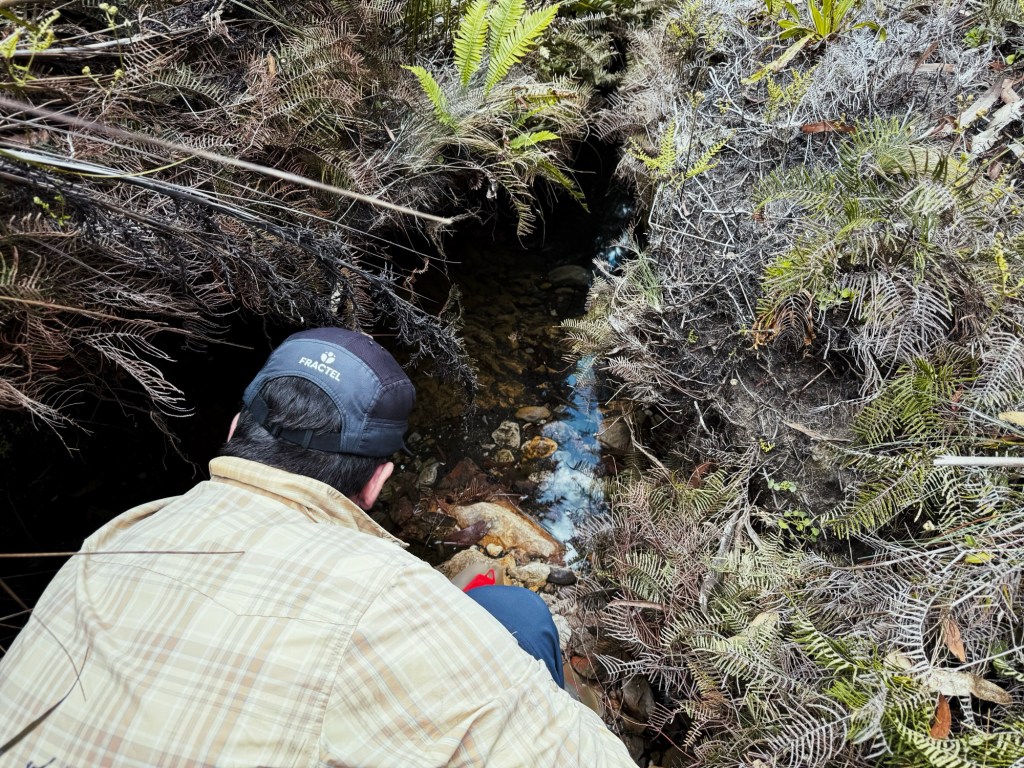
Immediately after Mount Cloudmaker, the trail grows even wilder, to almost no footpad at all. Thankfully, the bush isn’t too dense on the descent to Dex’s Creek. Dex’s Creek is a gorgeous campsite with a flat grassy patch that comfortably fits three tents and a fire pit. Although the creek wasn’t flowing, there was a deep, clear, stagnant pond we could filter our water from.
Dex’s Creek to Mount Strongleg
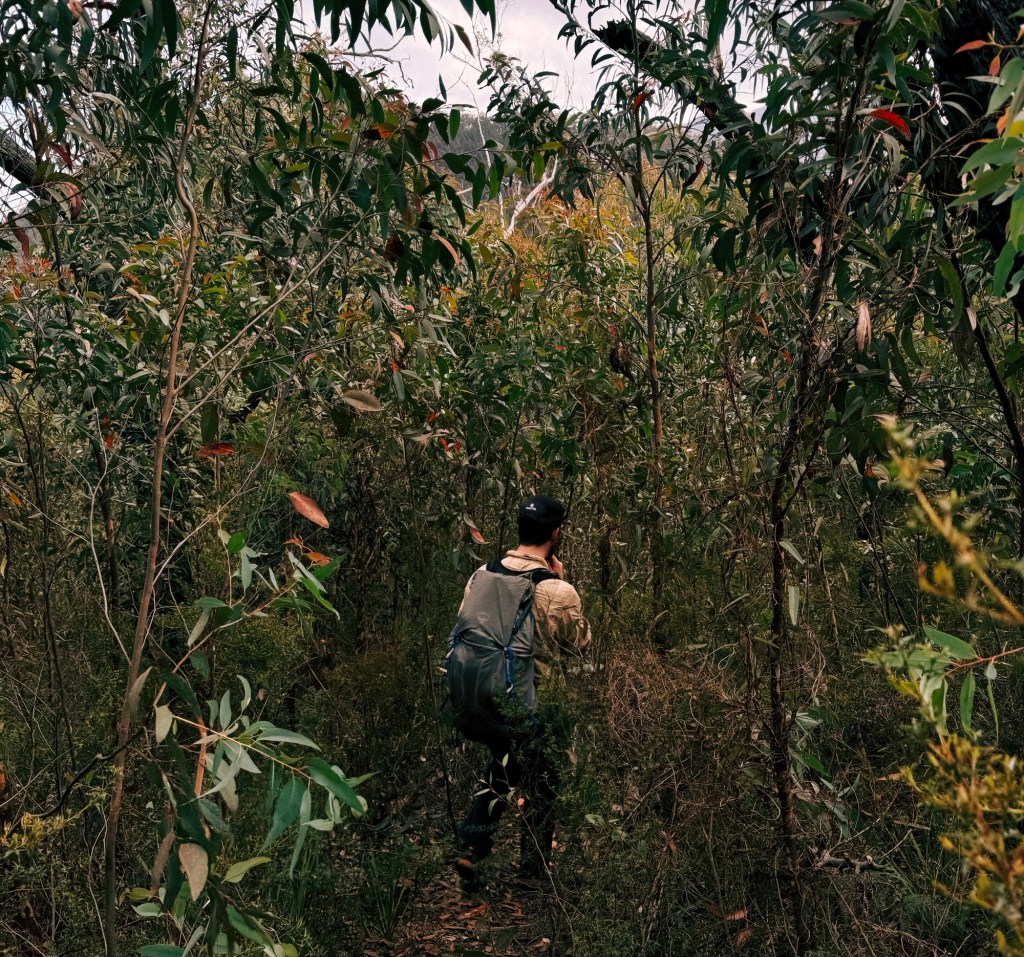
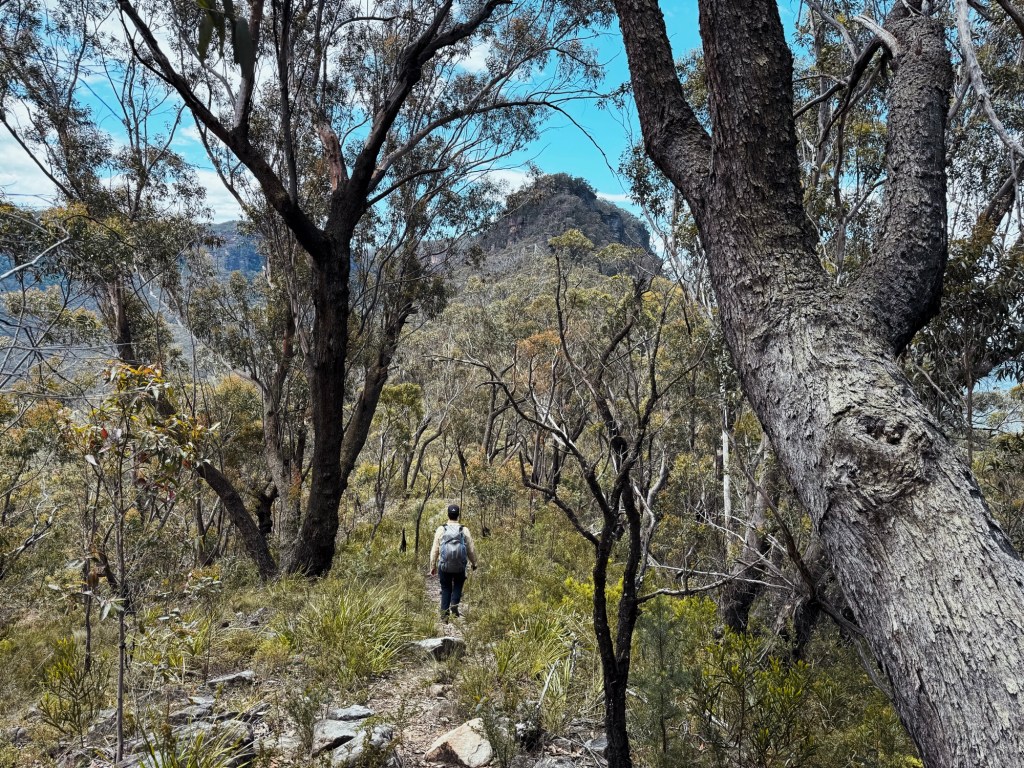
This section is where the K2K earns its reputation (for us anyway). There are several footpads leading out of the campsite through a bog, so it’s easy to be led astray. The trail is virtually non-existent around Carra Top, turning our pace into a sluggish 1km per hour. Trees clawed at our packs, and the overgrowth was relentless—claustrophobic even at times. Things improved as we neared Mount Strongleg, where the ridge narrowed, the trees feel away, and a footpad emerged again.
Mount Strongleg to Coxs River
The descent toward Coxs River was steep but manageable, if you stick right on the spur. Deviating too early risks landing in a labyrinth of scrub. On a hot spring day, the sight of the river below was a huge motivator for us.

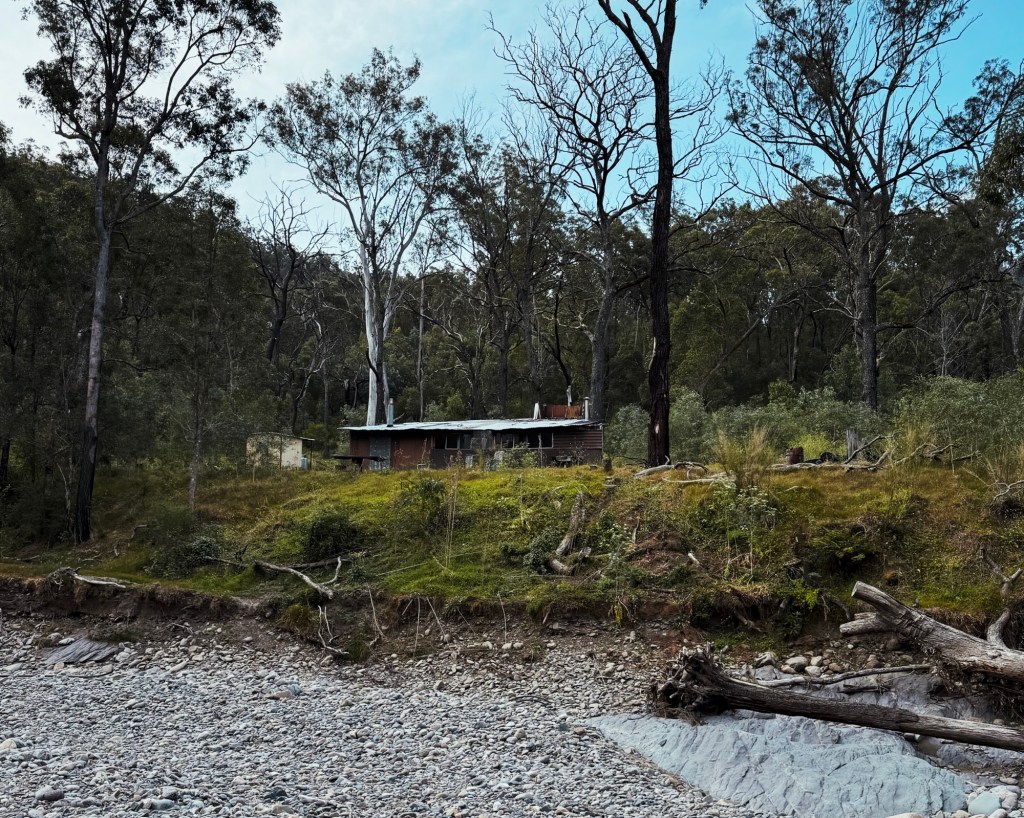
We arrived at Kanangra Creek, and took a quick dip in the river to refresh our weary bodies. We spotted a strange shack on the other side of the river, but it screamed private property so we didn’t cross to investigate. We continued down to the Cox’s River where we found a nice grassy spot along the riverbanks to settle in and set up camp for the night.
Day 2
Coxs River to Mount Yellow Dog
We started our second day nice and early, not knowing what to expect from the next part of the trail. As we ate our breakfast, a pair of sea eagles soared overhead, settling in a tree across from our camp.

Walking along the Coxs River, we searched for the best place to cross. Josh confidently opted to balance on a fallen tree, while I decided to get my feet wet, wading through a shallow section.
The entrance to the trail was tricky to spot, but once we hit the spur, the path became clearer. It was surprisingly well-trodden compared to the previous day. However, there are a few misleading footpaths where others had gone astray, so watch for the switchback turns.
Mount Yellow Dog to Mobbs Swamp
We stopped for a break at the summit of Mount Yellow Dog, marked by a small rock cairn. As we descended, the gums transitioned into a pine-filled forest, and the trail was littered with fallen trees. Climbing over one every couple of hundred meters, we guessed this was the aftermath of a recent storm.

Theres an optional high route to Splendour Rock and Mount Merrimerrigal, marked only by a single coloured tag on a tree. It’s easy to miss, so keep an eye out to spot the detour.
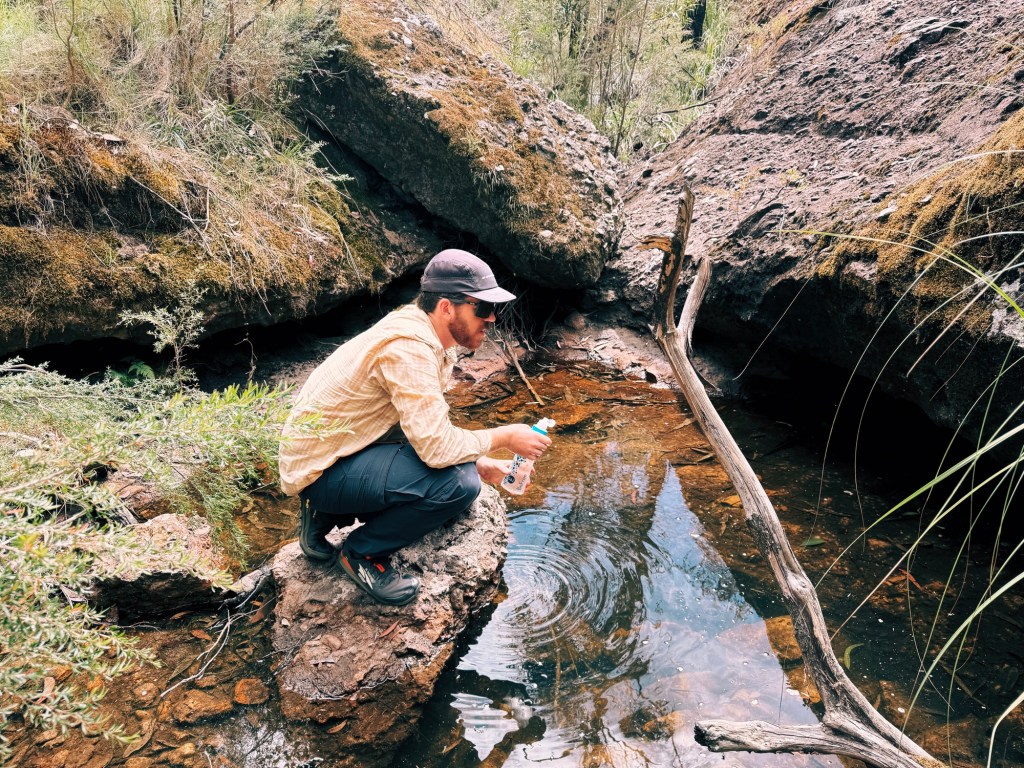
We soon arrived at Mobbs Swamp (sometimes called Mobbs Soak), where a newly built campsite surprised us. The area included a drop toilet still under construction. We went on a hut for some water at the nearby dried up creek, and found a stagnant pool to filter some water. Nearby, a rock overhang offered a shady spot to escape the heat for another snack break.
Mobbs Swamp to Medlow Gap
The trail suddenly spits us out onto a gravel road, a pleasant break for our weary bodies. We soon passed a gate with a warning sign threatening heavy fines for vehicles entering Sydney’s drinking water catchment area.

Medlow Gap to Tarros Ladder
At the fork in the road, we followed the Tarros Ladder-Medlow Gap walking track. This section of the trail is surprisingly well-maintained, though it involves a short, steep climb to reach Tarros Ladder.
I’d love to say I ascended Tarros Ladder with the grace of a mountain goat, but the reality had far more sweating and squealing. The climb includes rock scrambling, bolted holds, and a sturdy ladder. If you’re afraid of heights, this section can be intimidating. Thankfully, there are plenty of spots to catch a breather and take in the Bluey’s iconic sandstone cliffs, and Lake Burragorang (Warragamba Dam) visible in the distance.

Tarros Ladder, Narrow Neck, and Home
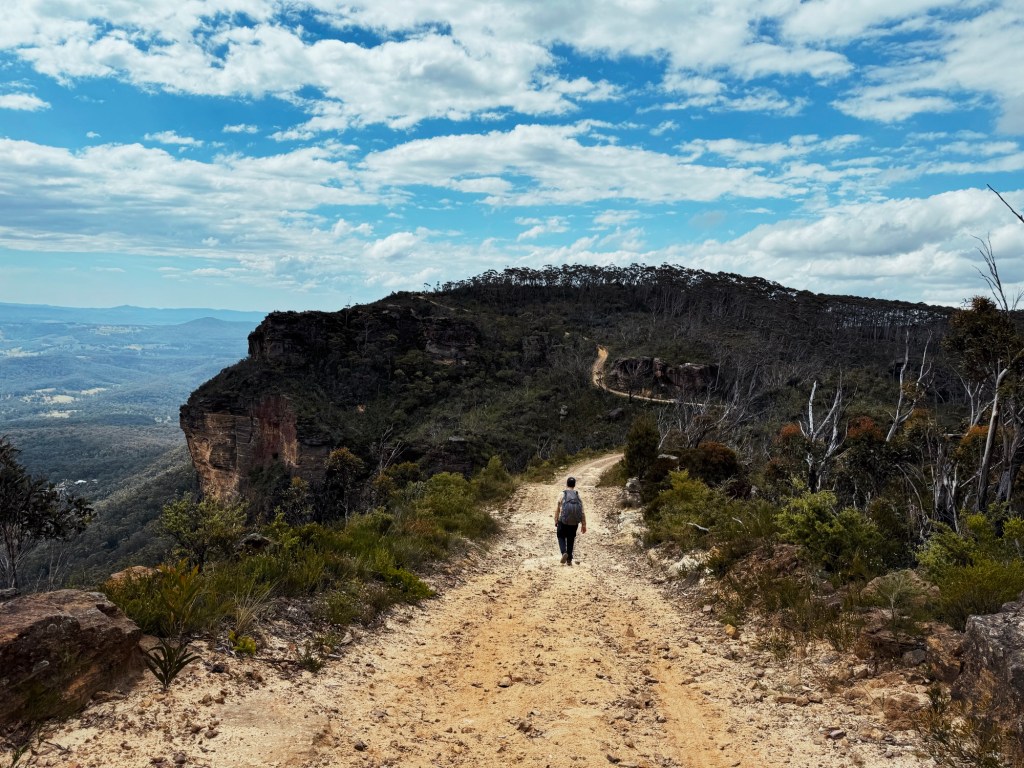
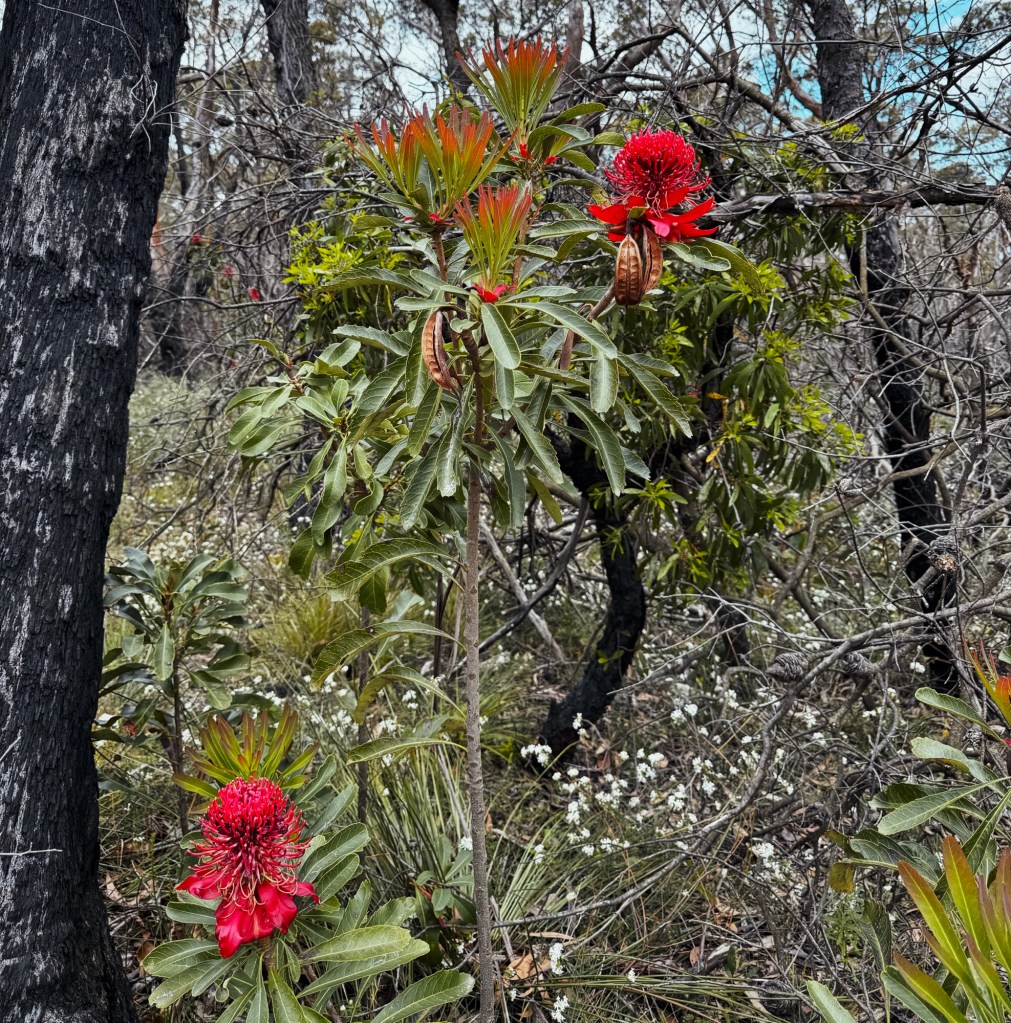
From the Narrow Neck, you’re on the home stretch. The final walk along Narrow Neck fire trail was an unexpected delight, having never been on this 4×4 track before. Wildflowers like honeysuckles and waratahs were in full bloom beside the gravel road, and the views were nothing short of spectacular. The track was so smooth, in fact, that we ran part of the final 9 kilometres back to the car at the Narrow Neck locked gate.
For the truly ambitious, the hike can extend south from Kanangra Walls to Mittagong. I haven’t walked this section yet, so I can’t comment on the condition of this track (just yet).
Tips for hiking the K2K:
Navigation is Non-Negotiable: This trail is more of a route—it isn’t marked, maintained, or clear. A solid GPX file or map and sharp navigation skills are critical.
Phone service: Phone reception (Optus) was available along the ridges but dropped out quickly in the valleys. A satellite phone or PLB is essential for emergencies.
Best Time to Hike the K2K: Spring and autumn are ideal, with moderate temperatures and stable weather. Avoid summer, as the heat and fire danger can be extreme.
Closures: Always check for park closures and fire bans before heading out.
Water: Water sources can be unreliable, especially in summer. The Coxs River is the only consistent option, but it requires filtering due to surrounding farmlands. Both Dex’s and Mobbs camp water supplies have been known to go dry.
Alternatively, after heavy rainfall, the Coxs river may flood, becoming impassable.
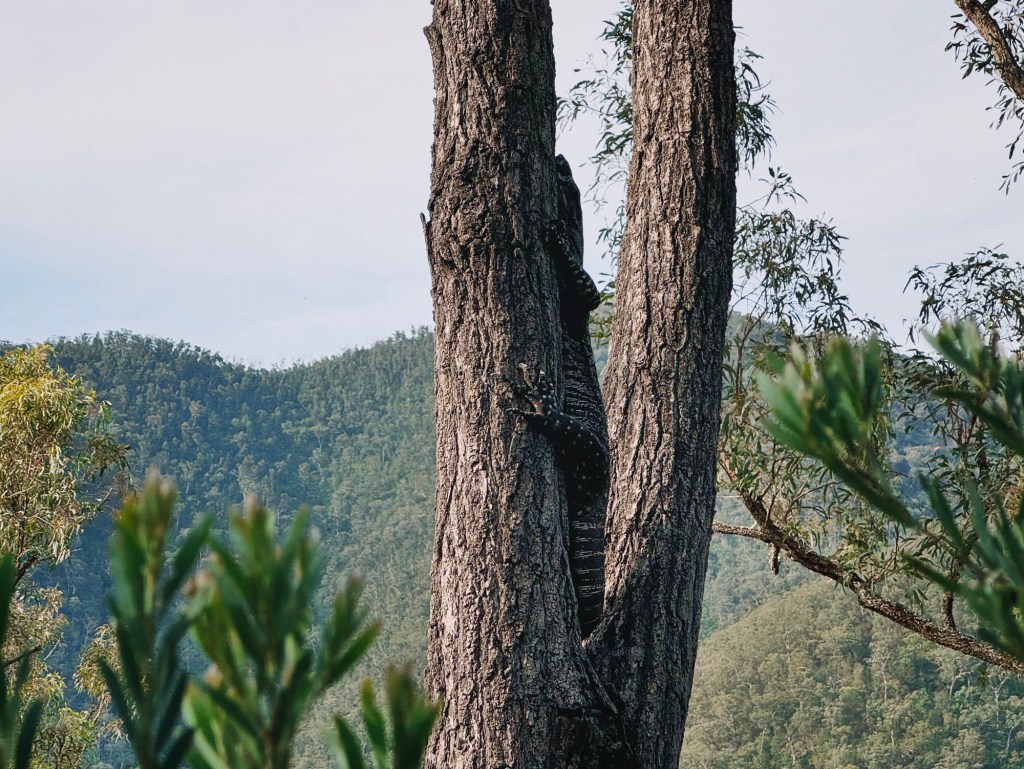
Wildlife: Snakes and Monitors are common, so always carry a snake bandage and a form of emergency communication just in case.
 Kate Aliice